Dancing in the Breakers
2026
Dancing In the Breakers.
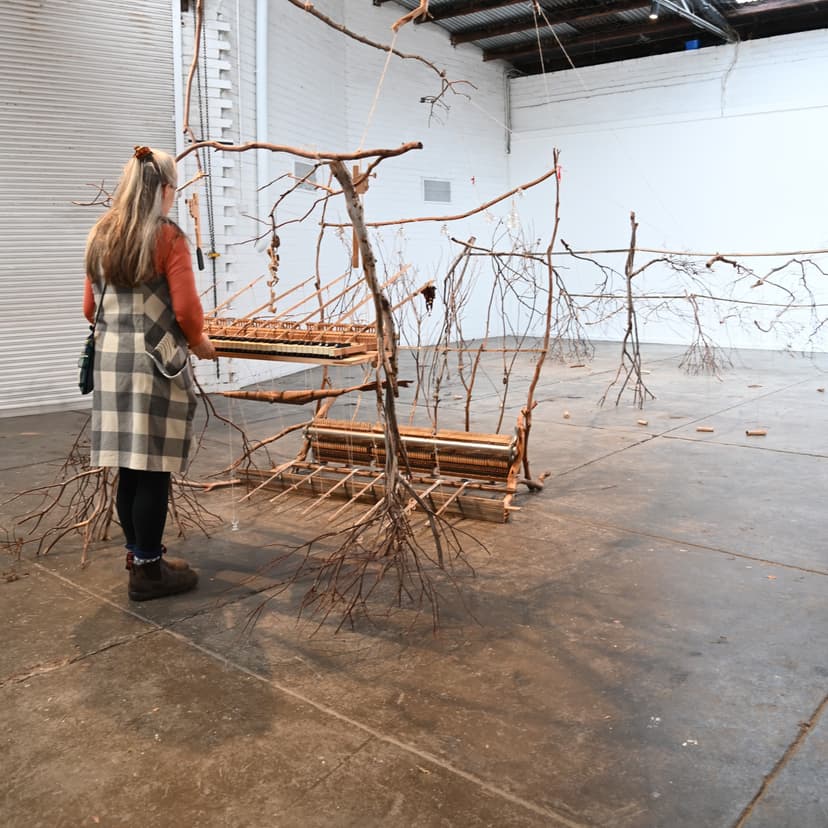
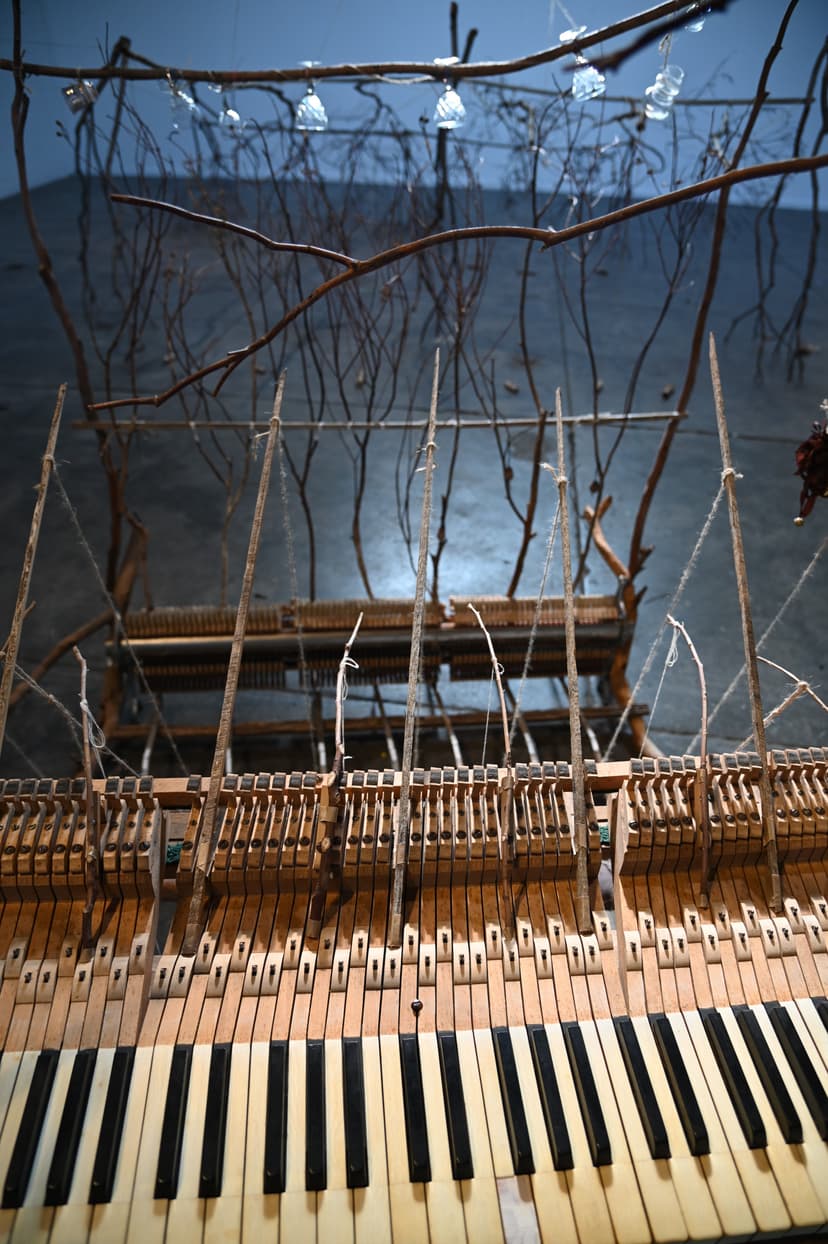
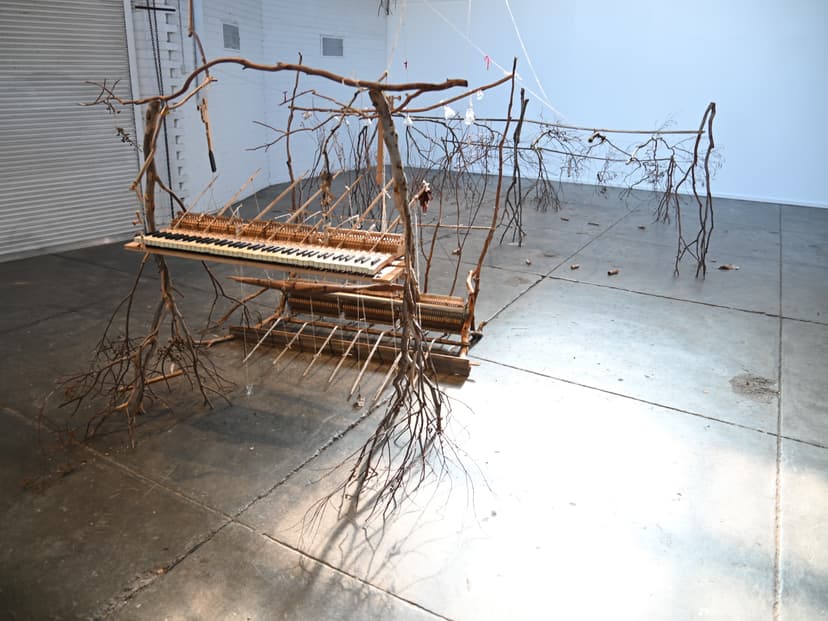
There is an art to taking things apart. A slow process where each act balances between what came before and what is to come. A year ago the piano from my previous show was collected for recycling. And the question was put forward of what I would like to keep. What had potential for a new piece and what was too valuable to discard? The beautiful keys with their ebony and ivory touch points had to be kept as a necessary acknowledgement of environmental cost and honour due, imbedded in the grain. The incredible mechanical ingenuity of the piano hammers offered a dynamic springboard for the next work.
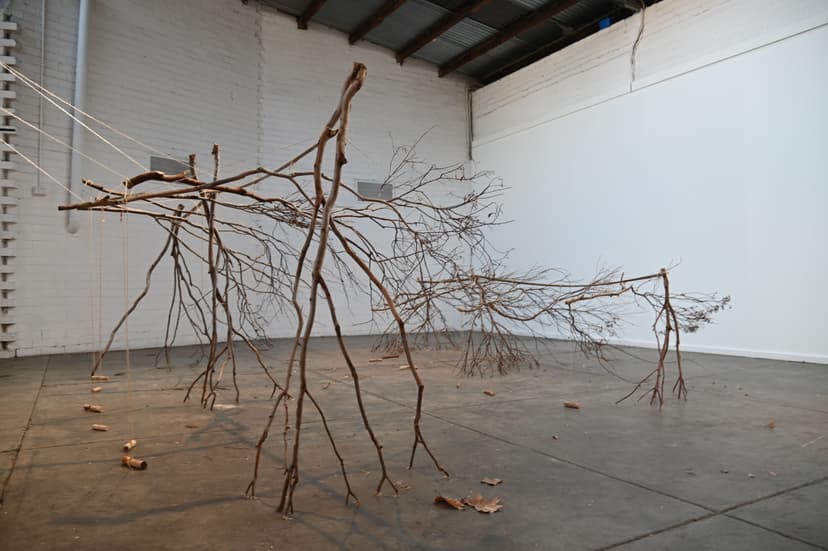
The other starting point for the work was a poem I wrote last summer at Mimosa Rocks. This gives it the name Dancing in the Breakers. It describes the experience of jumping over, and through the waves of a surf beach in southeast New South Wales. The dynamic action of the waves is translated into a series of pivoting eucalyptus branches and clapping sticks. These are large enough to evoke the size of the waves and the rhythm of the sea and provide a scaled reference to the body in landscape.
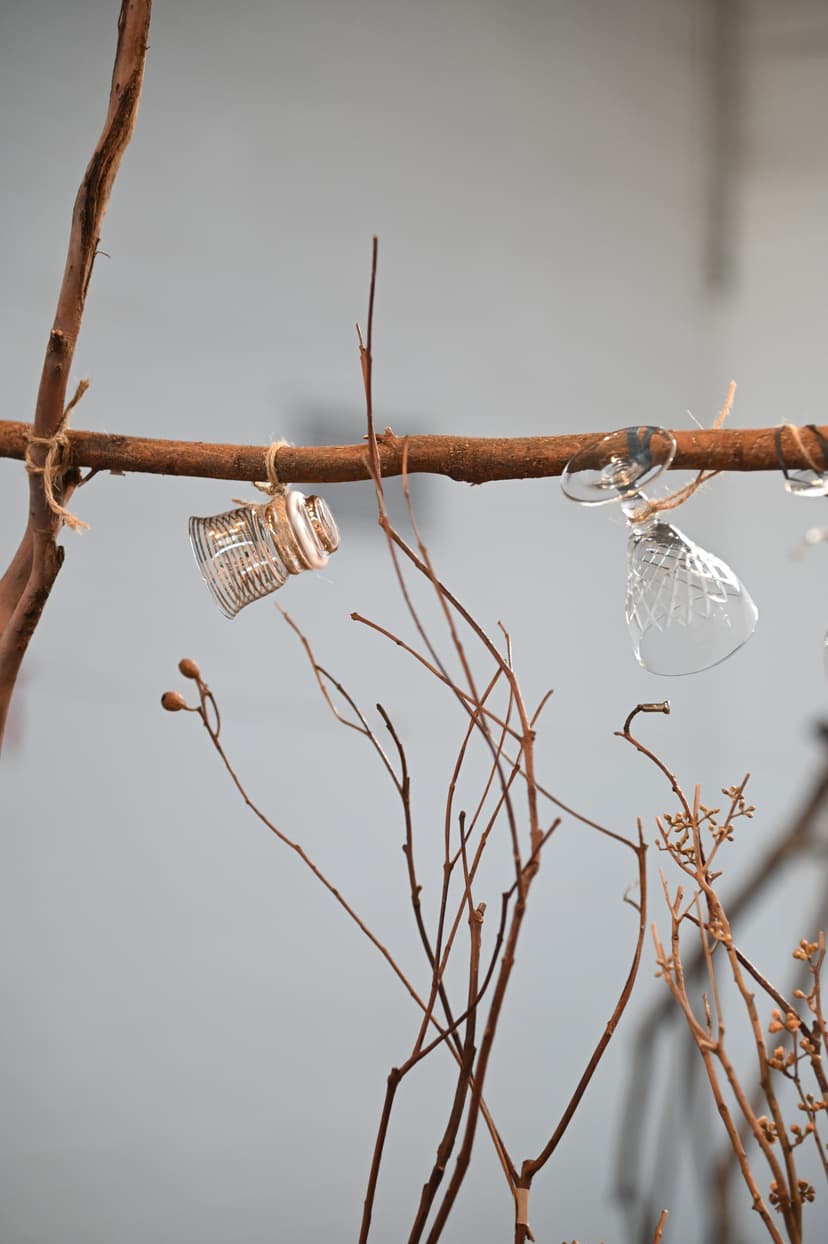
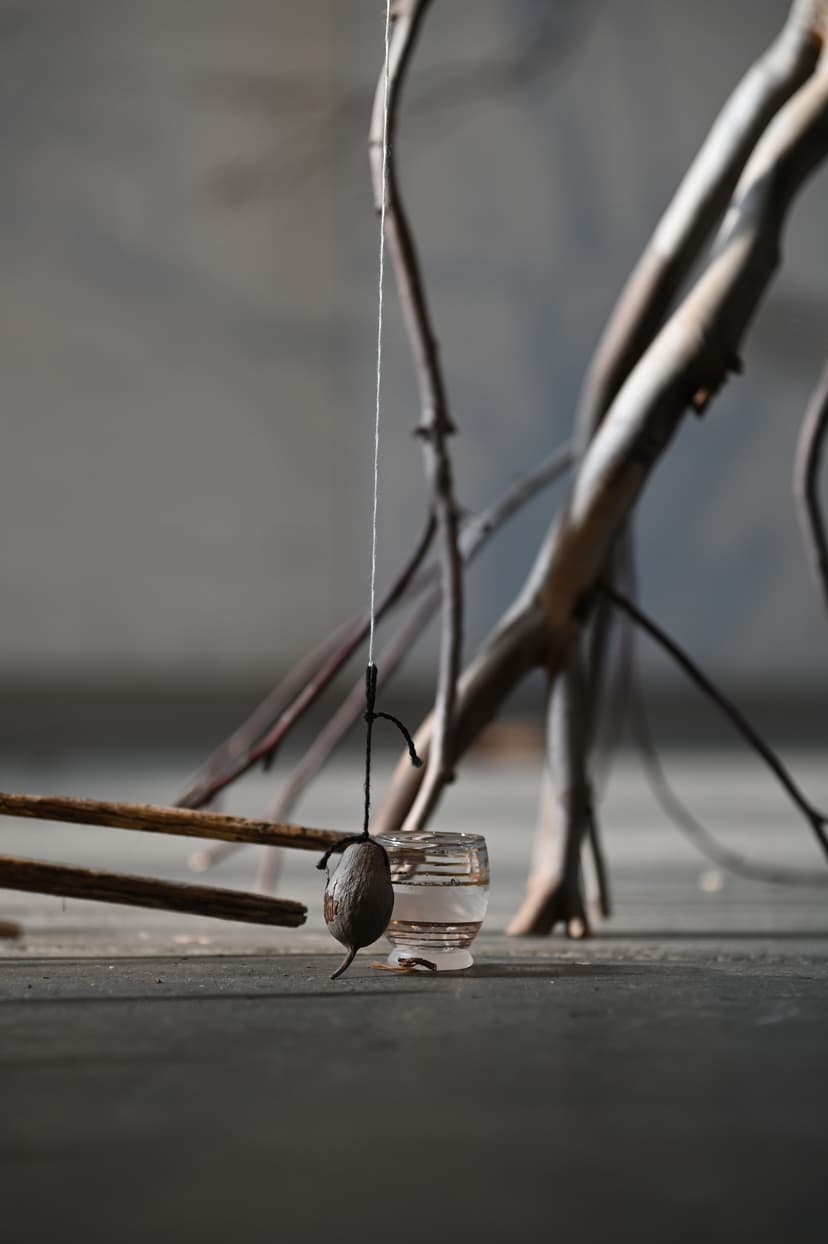
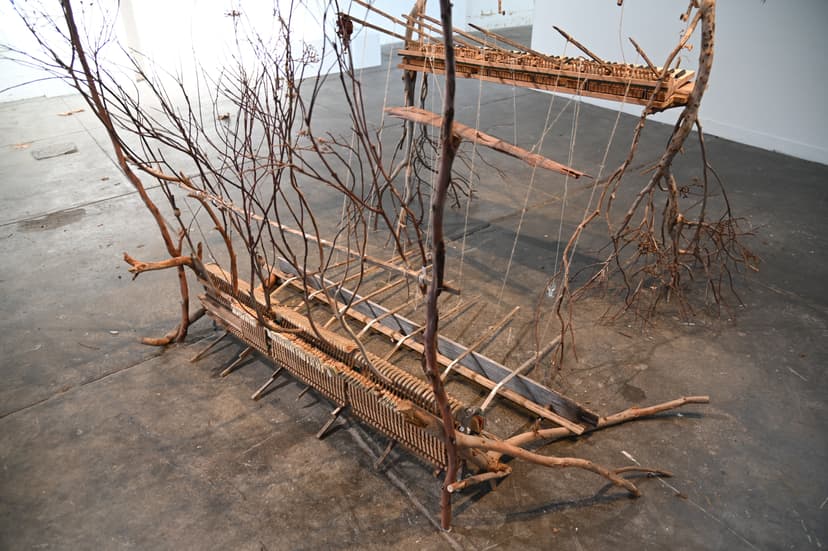
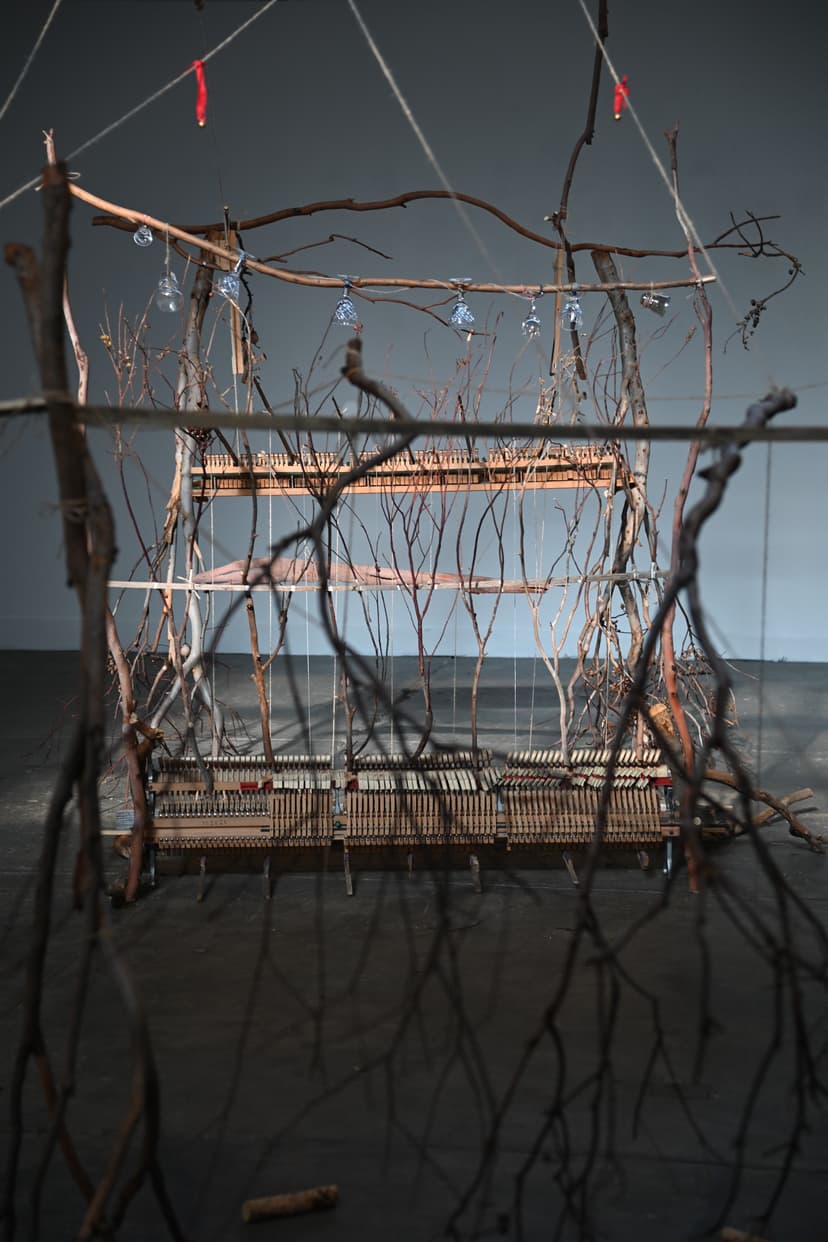
The kinetic energy for powering the breakers is driven by the act of playing the keys. A delicate web of fine sticks, string and aged hardwood fencing takes the action of pushing a key and transforms it into something else. This translation is made visible, so you can trace the act and the consequence. Perhaps it interacts with a gumnut striking dry bark, or another rattling in the small glass. If you strike one of the C notes it will link to the hammers, through a series of levers held together with cotton hinges and string. The hammers nudge a series of sticks which create a small set of waves. These in turn pivot to strike suspended glasses which chime as bells. The two keys from the top of the keyboard are repositioned to become handles for the levers which activate the breakers. When pulled they trigger the breakers by raising the back of the wave. As they fall the clap sticks strike the hard concrete, ringing clearly.
The activation of the piece is fully enlivened by Michael Roper. As a skilled musician, he can explore the acoustic to deepen our engagement with the work. This is an intimate act of listening, where being close to the source, also brings us close together.
There is an agency to Dancing in the Breakers which is personal. When you engage with the keyboard, striking and stroking the keys, you are never quite sure how the work will respond. It is not like playing the piano because you cannot really control the response. You put forward your request for a sound, and it may be delayed, or loud or fail to voice at all. So you need to listen intently, because it’s not just about what you want. The response is framed by things which are beyond the human. The fineness of the twig, which has absorbed the damp air, and so moved slightly beyond the mechanical specifications of the hammers. The wind through the gallery has moved that sherry glass by a few millimeters. The previous pull on the breakers was a bit heavy handed and they haven’t quite settled. And so your agency becomes measured and carefully gauged. Delicate steps in a fragile environment, full of beauty and delight.